
Medicare Part D Notices Are Due By October 15
The date for distributing Medicare Part D notices is approaching.
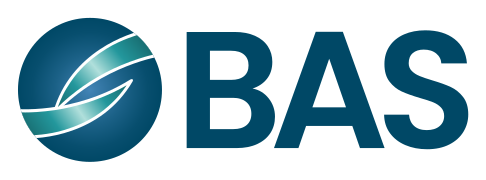
Each year after Forms 1095-C are distributed, HR teams receive questions from employees who believe the information is incorrect.

Each year after Forms 1095-C are distributed, HR teams receive questions from employees who believe the information is incorrect. Most concerns stem from misunderstandings about what the form reports rather than actual reporting errors. Having a consistent response process helps resolve issues quickly while avoiding tax advice.
As a reminder, Form 1095-C is an informational tax document. Employees generally do not need to attach it to their tax return. Its purpose is to show whether the employer offered qualifying health coverage during the year and to help the IRS administer Affordable Care Act requirements.
Start by explaining what the form does and does not do.
Form 1095-C reports:
It does not:
Many disputes resolve once employees understand the form reflects the offer of coverage, not enrollment elections or paycheck amounts.
Have the employee identify the exact issue. Common examples include:
Avoid interpreting tax consequences. Focus only on whether the employer reporting matches internal records.
Compare the form to documented eligibility and payroll data:
Review month by month. The form must reflect when coverage was available to the employee, not when they chose to enroll.
**If the form is correct: **Explain the difference between an offer of coverage and enrollment. Provide a brief written explanation if helpful. Direct the employee to a tax advisor for personal tax questions.
**If the form is incorrect: **Prepare a corrected Form 1095-C and provide the updated copy to the employee. If the form has already been filed with the IRS, submit a corrected filing as well.
A helpful closing explanation may include:
Most Form 1095-C disputes come from confusion about what the form represents rather than reporting errors. By verifying eligibility records, correcting true mistakes, and avoiding tax guidance, HR teams can resolve concerns efficiently while keeping the process compliant and consistent.
Benefit Allocation Systems (BAS) provides online solutions for: Employee Benefits Enrollment; COBRA; Flexible Spending Accounts (FSAs); Health Reimbursement Accounts (HRAs); Leave of Absence Premium Billing (LOA); Affordable Care Act Record Keeping, Compliance & IRS Reporting (ACA); Group Insurance Premium Billing; Property & Casualty Premium Billing; and Payroll Integration.
MyEnroll360 integrates with major insurance carriers for enrollment eligibility management (e.g., Blue Cross, Blue Shield, Aetna, United Health Care, Kaiser, CIGNA and others), and with leading payroll platforms for enrollment deduction management (e.g., Workday, ADP, Paylocity, PayCor, UKG, and others).
This article is for informational purposes only and is not intended as legal, tax, or benefits advice. Readers should not rely on this information for taking (or not taking) any action relating to employment, compliance, or benefits. Always consult with a qualified professional before making decisions based on this content.
The date for distributing Medicare Part D notices is approaching.
For employers with multiple related companies, understanding how the ACA treats employees who move between entities is important for accurate eligibility and reporting.

Employers should avoid making eligibility decisions based solely on the employee's relationship to the individual.