

Medicare Part D Notices Are Due By October 15
The date for distributing Medicare Part D notices is approaching.

As employers comply with federal ACA reporting, it’s important to also understand the state-specific rules that may apply.

When the federal Affordable Care Act (ACA) eliminated the individual mandate penalty, several states responded by implementing their own individual health coverage requirements to ensure residents maintain qualifying health insurance. These state mandates often come with reporting obligations that employers and health insurers must meet. As employers prepare for federal ACA reporting, it’s important to also understand the state-specific rules that may apply.
The ACA requires most Americans to have health insurance or face a penalty. However, Congress reduced the federal penalty to $0, effectively nullifying the individual mandate at the national level. Concerned about the potential negative impact on their health care exchanges, some states enacted their own individual mandates to maintain coverage levels and protect against adverse selection.
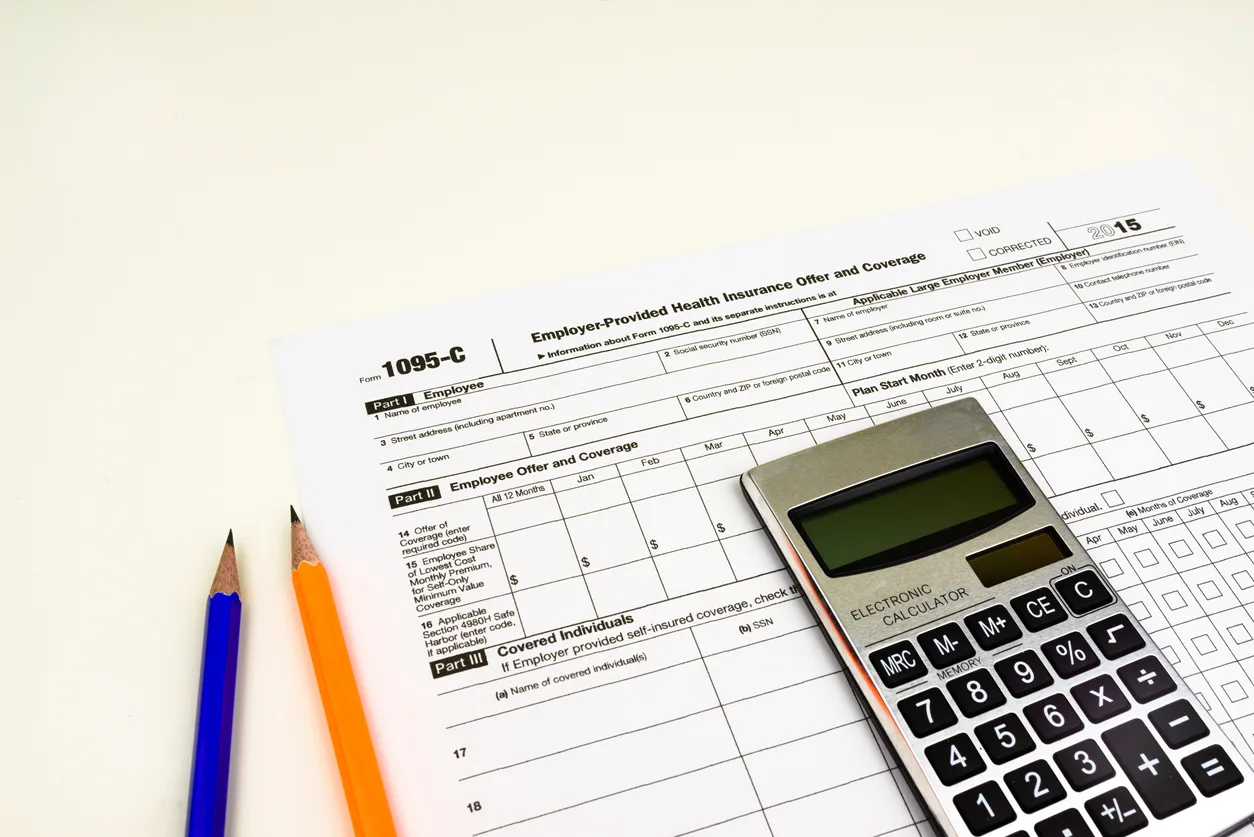
States with individual health coverage mandates generally require employers to furnish health coverage information to employees and report coverage details to state authorities. Below is a breakdown of state reporting requirements for the 2024 reporting year:
Action Items:
Action Items: Employers with self-funded major medical plans: Provide Form 1095-C or Form 1095-B to residents and file with the DC Office of Tax and Revenue.
Action Items:
Action Items:
Action Items: Employers with self-funded plans: Provide Form 1095-C or Form 1095-B to residents and file with the state. Employers with fully insured plans: Confirm the insurer is filing Form 1095-B with the state.
Employers with employees in states with individual mandates must navigate both federal and state requirements. For most states, the federal ACA forms (1095-B and 1095-C) satisfy individual reporting obligations. However, employers must meet state-specific deadlines and file the required information with state tax authorities.
Recent federal guidance allows employers to post the availability of 1095-C forms electronically instead of distributing paper copies to employees. However, this option may not apply to state-level reporting requirements unless explicitly stated in the state’s regulations. Employers must continue to meet state-specific obligations to furnish paper forms or comply with other prescribed methods.
By staying informed and proactive, employers can ensure compliance with both federal and state ACA reporting requirements.
Benefit Allocation Systems (BAS) provides online solutions for: Employee Benefits Enrollment; COBRA; Flexible Spending Accounts (FSAs); Health Reimbursement Accounts (HRAs); Leave of Absence Premium Billing (LOA); Affordable Care Act Record Keeping, Compliance & IRS Reporting (ACA); Group Insurance Premium Billing; Property & Casualty Premium Billing; and Payroll Integration.
MyEnroll360 integrates with major insurance carriers for enrollment eligibility management (e.g., Blue Cross, Blue Shield, Aetna, United Health Care, Kaiser, CIGNA and others), and with leading payroll platforms for enrollment deduction management (e.g., Workday, ADP, Paylocity, PayCor, UKG, and others).
This article is for informational purposes only and is not intended as legal, tax, or benefits advice. Readers should not rely on this information for taking (or not taking) any action relating to employment, compliance, or benefits. Always consult with a qualified professional before making decisions based on this content.
The date for distributing Medicare Part D notices is approaching.
For employers with multiple related companies, understanding how the ACA treats employees who move between entities is important for accurate eligibility and reporting.

Employers should avoid making eligibility decisions based solely on the employee's relationship to the individual.